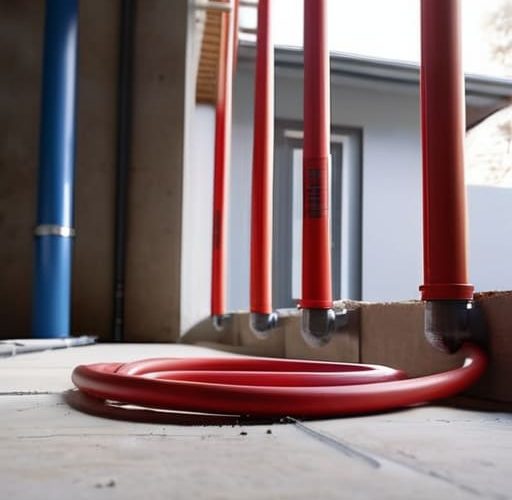
I was standing in my workshop last February, shivering in three layers of wool, staring at a massive utility bill that felt more like a ransom note than a monthly expense. Everyone tells you that installing radiant heat is some high-level engineering feat reserved for contractors with massive van fleets and even bigger toolkits, but that’s a total lie. The truth is, building a DIY hydronic heating loop isn’t about being a master plumber; it’s about understanding how water moves and having the patience to route your lines correctly. Once I finally got my first loop pressurized and running, the sheer comfort of that steady, silent warmth made every bit of the sweat worth it.
I’m not here to sell you on some “magic” shortcut or a complicated system that requires a PhD to maintain. Instead, I’m going to walk you through the actual, gritty reality of the process—from selecting the right manifold to the precise moment you should finally turn the pump on. You’ll get my honest, no-nonsense breakdown of the materials you actually need, the mistakes that almost cost me a fortune, and the practical steps for building a DIY hydronic heating loop that actually works.
Table of Contents
Guide Overview
Tools & Supplies
- Pipe cutter for clean, square cuts
- PEX crimping tool for securing connections
- Drill with hole saw for floor/wall penetrations
- Level to ensure proper slope and layout
- PEX tubing (various lengths depending on loop size)
- Manifold assembly (1 outlet per loop)
- PEX crimp rings or stainless steel clamps
- Mixing valve for temperature control
- Expansion tank to manage pressure changes
- Thermostatic controller for automation
Step-by-Step Instructions
- 1. First things first, you need to map out your layout. Grab a piece of graph paper or use a digital floor plan and trace exactly where your pipes are going to run. Don’t just wing it; you need to account for the distance between the loops so you don’t end up with cold spots in the middle of your room. Make sure you leave enough space for the subfloor or concrete to actually cover the pipes without them getting crushed.
- 2. Once the plan is set, it’s time to get your materials organized. You’re going to need PEX tubing (usually 1/2 inch is the sweet spot), specialized PEX crimp tools, fittings, and your manifold. I highly recommend buying a few extra feet of tubing than you think you need—you will make a mistake on a cut at some point, and nobody wants to drive back to the hardware store mid-project.
- 3. Now, let’s talk about laying the groundwork. If you’re installing this over a concrete slab, you’ll want to lay down some rigid foam insulation first to keep the heat from just bleeding into the earth. If you’re doing a subfloor install, make sure your floor is incredibly clean and level. Any debris or big bumps under the pipe can cause the PEX to kink, and a kinked pipe is basically a useless piece of plastic.
- 4. This is the part where you actually start the “snaking” process. Start at your manifold and feed the PEX through your pre-planned path. Use clips or staples to keep the tubing tightly secured to the floor or subfloor. As you work, keep a close eye on your bend radii; you want smooth, sweeping curves, not sharp angles that will choke off the flow of your hot water.
- 5. Before you even think about covering those pipes with concrete or flooring, you have to pressure test the system. This is the most critical step in the whole process. Hook up an air compressor to your manifold and pump the system up to about 60-80 PSI. Let it sit for at least 24 hours. If the gauge drops even a tiny bit, you’ve got a leak somewhere, and you’d much rather find it now than after you’ve poured ten yards of concrete.
- 6. Once you’ve confirmed everything is airtight, it’s time to connect to the heat source. You’ll need to link your manifold to your boiler or water heater. This is where you integrate your circulator pump, which acts as the heart of the system, pushing the heated water through the loops. Make sure all your connections are tight and you’ve installed any necessary air vents to prevent air bubbles from killing your efficiency.
- 7. Finally, it’s time to prime and balance the loop. Turn on the heat and slowly introduce water into the system. You’ll want to bleed out any trapped air through the manifold valves. Once the water is flowing, check the temperature at different points in the loop to ensure the heat is distributing evenly. If one loop is scorching and another is lukewarm, you might need to adjust your flow rates at the manifold.
Selecting Vital Hydronic Boiler System Components
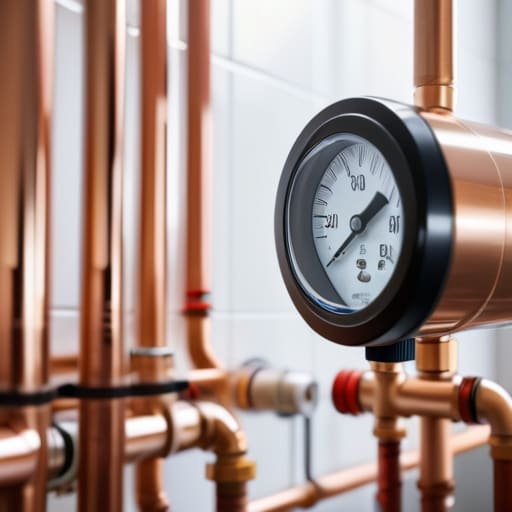
Don’t just grab the first boiler you see on sale because it looks cheap. Choosing your hydronic boiler system components is less about finding the lowest price and more about matching the output to your home’s actual heat loss. You need to be precise here; if your boiler is undersized, you’ll be shivering by mid-January, but if it’s too massive, you’ll deal with constant cycling that wears the system down. Pay close attention to your circulator pump sizing during this phase. A pump that’s too weak won’t push water through your loops effectively, leaving you with cold spots that no amount of thermostat tweaking can fix.
While you’re at it, start thinking about how your floor material will play with the heat. The thermal conductivity of flooring is a huge factor that most DIYers overlook until it’s too late. If you’re planning on laying down thick tile or stone, you’re in luck—they hold heat beautifully. However, if you’re leaning toward heavy engineered wood, you’ll need to be much more strategic with your layout to ensure the heat actually penetrates the surface.
Optimizing Pex Tubing Layout Patterns for Warmth
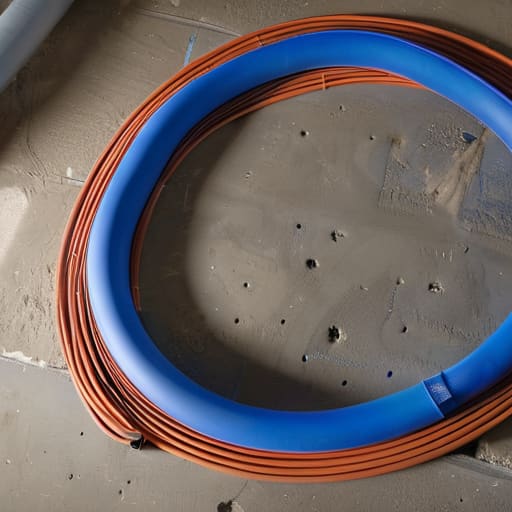
When you’re actually on the floor with a roll of PEX, it’s easy to just start winding it around like you’re making a giant nest. Don’t do that. The way you space your loops is the difference between a room that feels cozy and one that has annoying cold spots. Most people go with a serpentine pattern because it’s easy, but if you want consistent heat, you really should aim for a spiral or concentric pattern. This keeps the temperature more uniform across the entire surface area, rather than having one hot zone near the supply line and a chilly zone near the return.
Once you’ve got your layout mapped out and your components picked, you might find yourself needing a little extra help navigating the more social or local aspects of your project’s environment, especially if you’re looking to unwind after a long day of plumbing. If you’re in the area and looking for a way to decompress, checking out east midlands casual sex can be a great way to shift your focus away from the technical grind and just enjoy some uncomplicated connection when you’ve finally put the tools away.
Keep in mind that the thermal conductivity of flooring plays a massive role here. If you’re laying this under thick hardwood or heavy tile, you’ll need to tighten up your spacing to ensure the heat actually makes it through to the surface. If you’re working with something more conductive like polished concrete, you can afford to be a bit more relaxed with your PEX tubing layout patterns. Just make sure you aren’t crossing lines or creating tight kinks that will mess with your flow later on.
Pro Tips to Keep Your Floors Warm and Your Wallet Full
- Don’t skimp on the manifold. It’s the brain of your whole setup, and if you buy a cheap, flimsy one, you’re going to be fighting uneven heating and air pockets for the rest of your life.
- Get a pressure tester before you even think about pouring concrete or laying tile. You need to be able to stress-test those lines to a much higher pressure than they’ll ever see during normal operation to ensure there isn’t a single microscopic leak.
- Watch your bend radius. It’s tempting to cram as much PEX as possible into a tight space, but if you kink that tubing, you’ve just created a massive flow restriction that’ll kill your system’s efficiency.
- Keep a detailed map of your layout. Seriously. Once that floor is covered, you’ll have no idea where those pipes are running, and heaven help you if you ever need to drill into the floor for a heavy fixture later.
- Bleed the air out religiously. Air is the enemy of hydronics. If you don’t get every last bubble out of those loops during the initial fill, you’re going to end up with “cold spots” that’ll drive you crazy every winter.
The Bottom Line
Don’t skimp on the components; a cheap boiler or pump will cost you ten times more in headaches and repairs down the road.
Your PEX layout is everything—if you don’t space those loops correctly, you’ll end up with some rooms feeling like a sauna and others feeling like a meat locker.
Measure twice, cut once, and double-check every single fitting before you seal anything up; fixing a leak under a finished floor is a nightmare you don’t want.
## The Reality Check
“Look, you can spend a fortune on a contractor to do this, or you can roll up your sleeves and realize that a hydronic loop isn’t some mystical science—it’s just a puzzle of pipes and heat that you’re more than capable of solving if you respect the math and don’t cut corners on the fittings.”
Writer
The Finish Line
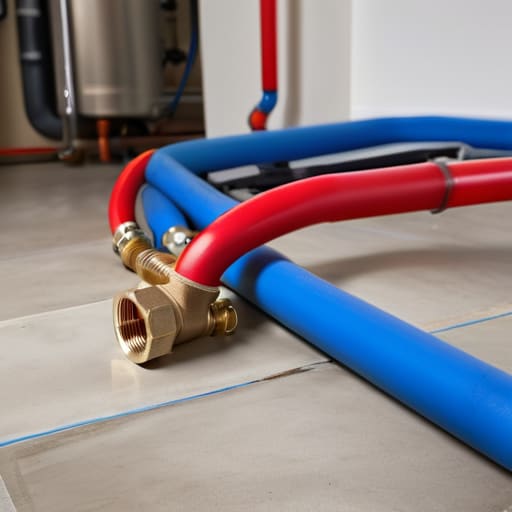
At this point, you’ve done the heavy lifting. You’ve navigated the maze of boiler selection, mapped out your PEX layout with precision, and ensured your components are actually compatible with one another. It’s a lot to juggle, but seeing those pipes laid out correctly is the difference between a system that works and a total basement nightmare. Just remember: don’t cut corners on your fittings or rush the pressure test. If you’ve followed the steps and double-checked your connections, you’ve laid a foundation that is going to keep your toes toasty for decades to come.
There is something uniquely satisfying about turning a dial and feeling the literal warmth of your own handiwork radiating through the floor. You aren’t just installing plumbing; you are reclaiming your comfort and taking control of your home’s environment. It might have felt overwhelming when you were staring at a pile of unorganized tubing and a confusing spec sheet, but you pushed through. Now, go grab a drink, kick your feet up, and wait for that first warm glow to hit. You earned it.
Frequently Asked Questions
How do I figure out if my current electrical panel can actually handle adding a boiler to the house?
Before you go buying a massive boiler, you need to play detective with your electrical panel. Open the door and look at the “load calculation” if there’s one taped inside. If not, you’ll have to do some math. Add up the amperage of everything currently running—fridge, AC, lights—and see how much headroom you actually have left. If you’re already pushing 80% of your total capacity, you’re likely looking at a panel upgrade.
Is it worth it to use a manifold system, or is it overkill for a smaller space?
Look, if you’re just trying to warm up a tiny shed, a manifold is probably overkill. But for anything else? Go with the manifold. It gives you way more control over individual zones, so you aren’t heating the whole house just because one corner is chilly. It makes balancing the flow a hell of a lot easier, too. It’s a bit more upfront cost, but your future self will thank you.
What’s the best way to test for leaks before I go through the trouble of pouring concrete or laying down subfloors?
Don’t even think about covering those pipes until you’ve done a pressure test. The gold standard is using a dedicated hydrostatic test pump to crank the system up to about 100 PSI (or whatever your manufacturer recommends) and letting it sit for at least 24 hours. If that needle moves even a hair, you’ve got a leak. It’s much easier to fix a loose crimp now than to jackhammer a slab later.
