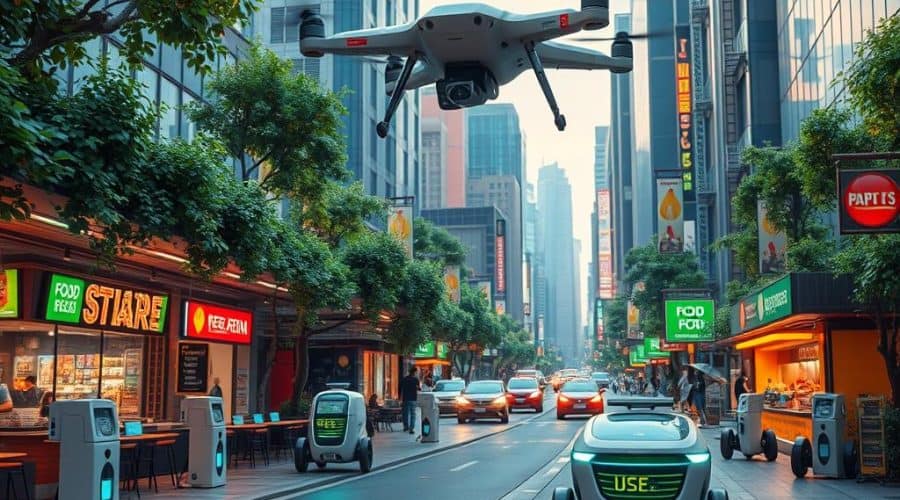
Did you know the online food delivery app market may hit $1.22 trillion in 2024? This growth shows more people want quick food delivery options. Companies like UberEats, Postmates, and Grubhub lead the market, but there’s room for new businesses. By using AI and machine learning, these apps are improving customer experience and making operations smoother.
Last year, the industry made $22 billion. Forecasts say it could reach over $31 billion by 2025. This suggests a bright future for food delivery, filled with new tech innovations.
Key Takeaways
- Online food delivery app market expected to reach $1.22 trillion by 2024.
- AI-powered apps achieve a 95% accuracy rate, boosting upsell rates by 75%.
- Convenience is prioritized by over half of customers using food delivery services.
- Major industry players include UberEats, Postmates, and Grubhub.
- Understanding market dynamics is essential for success in the food delivery sector.
- Market revenues predicted to soar from $22 billion to over $31 billion by 2025.
Emerging Trends in Food Delivery Tech
The food delivery industry is changing fast, thanks to new tech and what customers want. People now prefer the ease of getting meals delivered, changing how they order food.
Growth of On-Demand Services
The global food delivery market is now worth more than $150 billion, a huge leap since 2017. In the U.S., delivery sales doubled during the pandemic, outpacing restaurant growth. This shift has made app-based ordering more popular, boosting the demand for quick and easy service.
Acceptance of AI and Machine Learning
AI is transforming food delivery, making it more efficient and enhancing customer care. In 2020, 40% of food companies began using AI, a number that’s expected to grow. The AI sector in food and drink could grow 19% yearly until 2025, reaching $5.9 billion.
Conversational AI helps with the supply chain, allows for real-time tracking, and predicts busy times for faster delivery. Virtual restaurants, or ghost kitchens, also benefit from AI, making ordering and food prep smoother. This tech responds to the need for no-contact deliveries, ensuring a safer eating experience.
Innovations in Food Delivery Tech
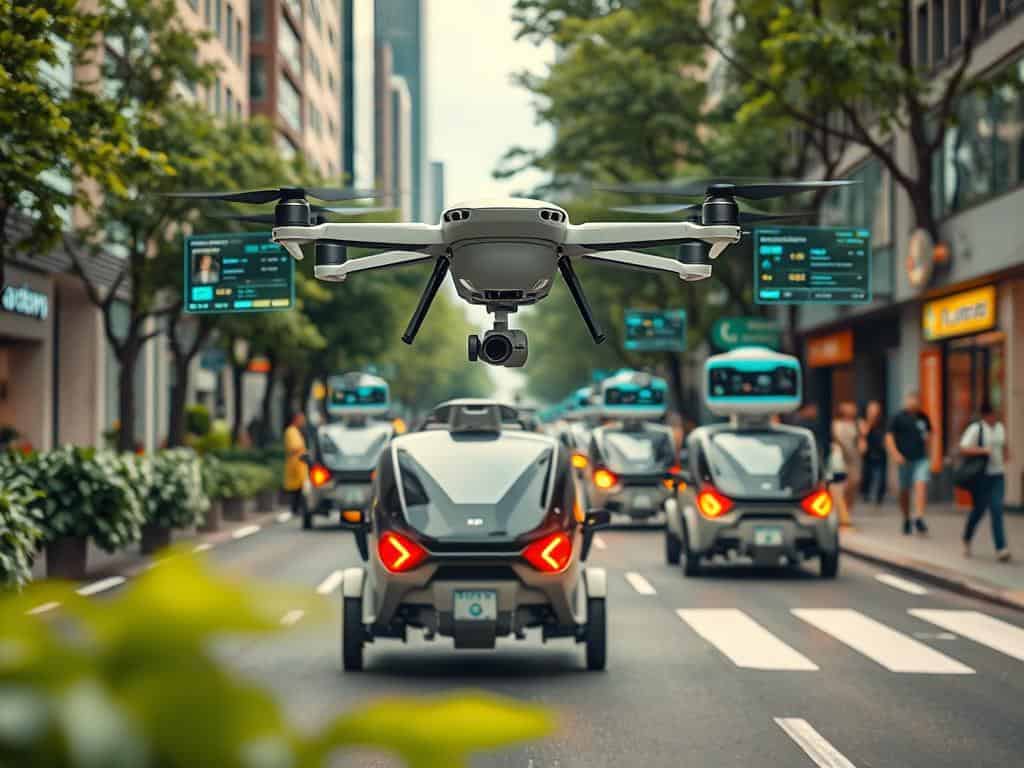
In the fast-paced world of food delivery, innovations are changing the game.
Businesses now use dynamic pricing to change prices as market conditions fluctuate. This strategy is great during busy times or bad weather. It helps companies increase profits. By adopting tech for convenience, companies make dynamic pricing work for them and their customers.
Dynamic Pricing for Improved Profitability
Changing prices in real time is the new normal in food delivery. AI systems predict when demand will rise. This lets businesses adjust prices on the fly. Dynamic pricing keeps prices fair and boosts profits. It’s vital in a competitive market where most customers frequently order food online.
Routing and Logistics Optimization
Improving delivery efficiency is critical.
AI uses traffic and feedback to find the best routes. This could cut delivery times by up to 25%, says McKinsey. With smarter logistics, delivery services save money and deliver faster. Logistics optimization makes delivery more reliable, pleasing companies and customers alike.
Enhanced User Experience through Personalization
Personalization is key to keeping users happy. Food apps use data to suggest meals and features users will like. This makes the app more engaging. Apps offering a personal touch see customers coming back. They build loyalty by making each user’s experience unique.
Conclusion
Reflecting on food delivery tech, we see a future full of promise. Innovative solutions appear every year, improving convenience and efficiency. The online food delivery market is expected to reach US$182.3 billion by 2024. This encourages businesses to invest in new technologies that meet changing customer needs.
AI and machine learning are speeding up the evolution of food delivery. They make user experiences more personal and operations smoother. For businesses wanting to stay ahead, adopting these technologies is key. The pandemic showed the importance of adapting quickly, with mobile platforms gaining a lot.
Businesses must adapt their models to meet customer demands in a changing world. The focus should be on sustainability, fair prices, and good practices. This builds trust and loyalty. The future of food delivery tech depends on innovation, technology, and putting customers first. This will lead to success in the coming years.
