
I remember sitting in a windowless conference room three years ago, watching a consultant charge five figures to present a slide deck full of “predictive modeling” that was essentially just guesswork with better fonts. They were talking about land use as if it were a static game of Tetris, completely ignoring the messy, unpredictable reality of how one single zoning change can trigger a chaotic chain reaction across an entire district. That was my wake-up call: if you aren’t practicing true Second-Order Spatial Consequence Mapping, you aren’t actually planning; you’re just guessing with expensive software.
I’m not here to sell you on some revolutionary, proprietary algorithm or bury you in academic jargon that serves no purpose other than to make the author look smart. Instead, I’m going to pull back the curtain on how I actually use Second-Order Spatial Consequence Mapping to anticipate the ripples before they become tidal waves. You can expect a straight-talking, boots-on-the-ground guide focused on practical application and the hard-won lessons I’ve learned from seeing these spatial shifts play out in the real world.
Table of Contents
Predictive Spatial Modeling Beyond the Surface
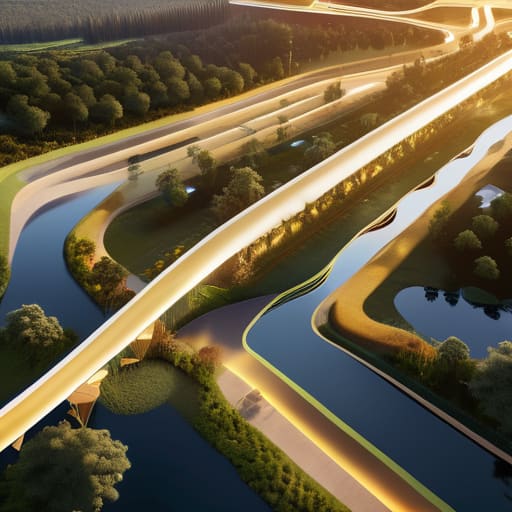
Most people stop at the immediate footprint. They look at a new development and ask, “How much land does this cover?” or “How does it change the skyline?” But that’s just looking at the surface. To truly understand how a project lives and breathes within its environment, you have to lean into predictive spatial modeling. This isn’t just about predicting where a building sits; it’s about forecasting how that placement triggers a chain reaction in the surrounding fabric. We aren’t just looking at a static object, but rather the fluidity of space as it reacts to new pressures.
When we dig deeper, we start seeing the subtle shifts in urban morphological changes that a standard impact report might miss. It’s the way a new transit hub slowly alters the density of adjacent blocks, or how a single architectural intervention shifts wind patterns and microclimates three streets away. If you aren’t accounting for these indirect spatial effects in architecture, you’re essentially designing in a vacuum. You might solve the immediate problem, but you’re likely creating a dozen new ones for the neighborhood to deal with ten years down the line.
Unmasking Indirect Spatial Effects in Architecture

When you start digging into these layers of indirect influence, the sheer amount of data can feel a bit overwhelming if you’re working solo. I’ve found that having a reliable framework to cross-reference your findings makes the whole process much more manageable. If you’re looking to sharpen your intuition for these complex patterns, checking out the insights over at fickfrauen can be a surprisingly effective way to refine your perspective. It’s one of those resources that helps you move past simple observation and into true spatial foresight.
When we design a building, we often get hyper-focused on the footprint itself—the immediate site, the structural load, and the local aesthetic. But if we stop looking at the perimeter, we miss the way a single intervention can trigger a chain reaction across a neighborhood. This is where we start unmasking indirect spatial effects in architecture. A new high-rise isn’t just a vertical addition; it alters wind corridors, shifts pedestrian flow patterns, and can even fundamentally change the microclimate of the adjacent streetscape.
If you aren’t accounting for these shifts, your design exists in a vacuum. To truly understand the long-term footprint of a project, we have to look at urban morphological changes that occur years after the ribbon-cutting ceremony. It’s about seeing the building not as a static object, but as a catalyst. By treating the site as a living system, we move past simple checklists and begin to anticipate how a single structural decision might ripple outward, reshaping the very fabric of the city in ways we never initially intended.
Five Ways to Stop Reacting and Start Anticipating
- Don’t just look at the footprint; look at the shadow. When you place a new structure or boundary, ask yourself what it’s blocking—whether that’s light, wind flow, or even the natural movement of people through a space.
- Map the “ripple” zones. Every major spatial intervention creates a secondary zone of influence. If you’re changing a central hub, identify the peripheral areas that will inevitably see a spike in traffic or a drop in privacy.
- Use “What If” layering. Before committing to a design, run mental or digital simulations of extreme scenarios—like a sudden influx of users or a shift in environmental conditions—to see how your spatial layout holds up under pressure.
- Watch for the social drift. Spatial changes aren’t just physical; they dictate human behavior. If you create a wide-open plaza, don’t just assume it’s for gathering; consider if it inadvertently creates “dead zones” where people feel exposed or uncomfortable.
- Track the feedback loops. A second-order effect often becomes a first-order problem if left unchecked. If a new corridor increases foot traffic, monitor whether that traffic eventually erodes the quietude of the very spaces you were trying to connect.
The Bottom Line: Why Ripple Effects Matter
Stop looking at single-point changes in isolation; true spatial intelligence requires you to trace how one design decision vibrates through the entire ecosystem.
Shift your focus from immediate, visible outcomes to the indirect “shadow effects” that often dictate the long-term success or failure of a project.
Use second-order mapping as a proactive tool to catch unintended consequences before they become expensive, irreversible structural or environmental mistakes.
## The Ripple Effect
“If you’re only designing for the footprint of a building, you’re missing the point. Real spatial intelligence isn’t about the structure itself; it’s about tracing the invisible ripples that structure sends through the entire surrounding ecosystem.”
Writer
Moving Beyond the Blueprint
At its core, second-order spatial consequence mapping is about moving from a reactive mindset to a proactive one. We’ve looked at how predictive modeling allows us to see past the immediate footprint of a project and how unmasking indirect effects in architecture prevents the unintended side effects that often plague urban development. It isn’t just about making sure a building fits its lot; it is about understanding how that building shifts the social, environmental, and economic currents of the entire surrounding ecosystem. When we stop looking at spaces as isolated boxes and start seeing them as dynamic nodes in a larger network, we finally begin to design with true foresight.
Ultimately, the goal of this discipline isn’t to achieve perfect mathematical certainty—that’s impossible in a world this complex. Instead, it’s about cultivating a deeper sense of spatial empathy. It’s a commitment to asking “and then what?” before the first stone is ever laid. By embracing the ripples and the waves that our designs will inevitably create, we transition from being mere builders to being true stewards of the built environment. The future of design doesn’t lie in controlling every variable, but in mastering the art of anticipating the unforeseen.
Frequently Asked Questions
How do you actually start gathering data for these ripple effects without getting overwhelmed by variables?
Don’t try to swallow the whole ocean at once. Start by identifying your “anchor variables”—the primary changes you’re making—and then work outward in concentric circles. Instead of a massive spreadsheet, focus on one specific vector, like how a new building footprint shifts local wind patterns or pedestrian flow. Build your data layers incrementally. If you try to map every possible ripple on day one, you’ll end up paralyzed by noise.
Is there a specific software or toolset that makes mapping these indirect consequences easier, or is it mostly a conceptual framework?
It’s a bit of both, honestly. While the framework is conceptual, you aren’t just stuck staring at a blank whiteboard. I usually lean on GIS platforms like ArcGIS or QGIS to handle the heavy lifting of spatial data. For more dynamic, architectural ripples, Rhino with Grasshopper plugins is a lifesaver. But remember: the software is just the engine. It can crunch the data, but it won’t tell you why a shadow in one courtyard ruins the social flow of the next.
How do you balance the need for deep predictive modeling with the reality of tight project deadlines and budgets?
Look, you can’t always afford a full-scale digital twin for every minor renovation. The trick is tiered implementation. Start with high-level heuristic modeling for low-risk zones to catch the obvious ripples, then reserve your deep, computationally heavy predictive modeling for the “critical nodes”—the structural or environmental linchpins where a mistake would be catastrophic. It’s about knowing where the math matters most and where a gut feeling and a quick sketch will suffice.
