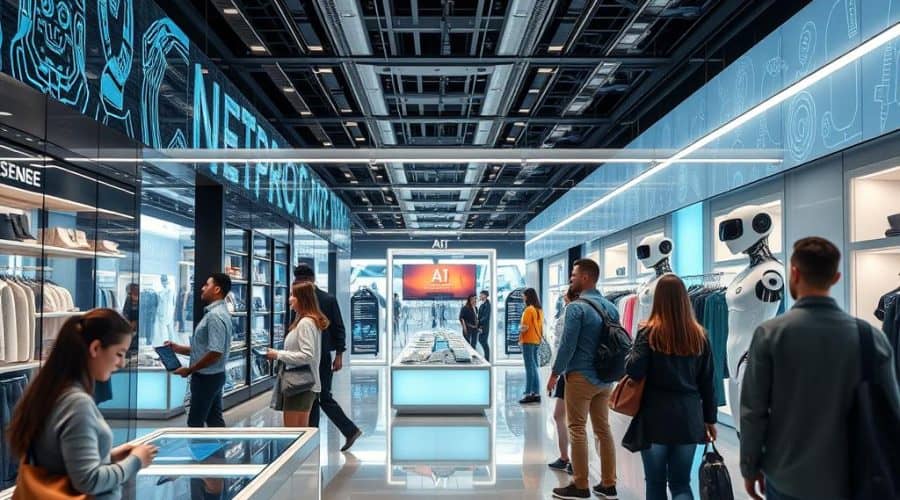
A recent 2024 Nvidia study found that 69% of retailers with AI saw a big jump in sales. At the same time, 72% cut their costs a lot. AI in retail is changing the game for 2024.
The global AI in retail market is set to hit $85.07 billion by 2032. This change is huge. AI is making shopping more personal, which is making customers happier and more loyal.
This article will show how businesses can use these new tools. They can meet and even beat customer expectations. This will help them grow in a tough market.
Key Takeaways
- 69% of retailers benefit from revenue increases after implementing AI.
- The global AI in retail market is expected to reach $85.07 billion by 2032.
- AI-driven tools are making shopping more personal.
- Efficient customer interactions lead to heightened brand loyalty.
- AI is key for making retail operations more efficient.
The Impact of AI on Shopping Experience
AI is changing how we shop, making it more exciting and personal. It lets companies offer tailored shopping experiences that make customers happier. Brands using AI work smarter and connect better with their customers.
AI-Driven Retail and Personalization
Personalization is key in today’s retail world. Levi Strauss & Co. uses AI to create special offers for different customers. American Eagle tracks inventory with AI, so products are ready when you want them.
Puma uses AI for custom styling, giving customers unique shopping experiences. Levi’s aims to use AI for different body types, solving size and fit issues that cause 25% of online returns.
Enhanced Customer Interactions
AI is changing how we interact with stores. Retailers like Tropical Smoothie Cafe are excited about AI, rating it an 8. They see AI helping with order predictions and staffing, improving their work.
Now, customers expect quick help, and AI provides it 24/7. On Amazon, AI suggests products based on what you’ve looked at, making shopping easier. These changes help keep customers coming back.
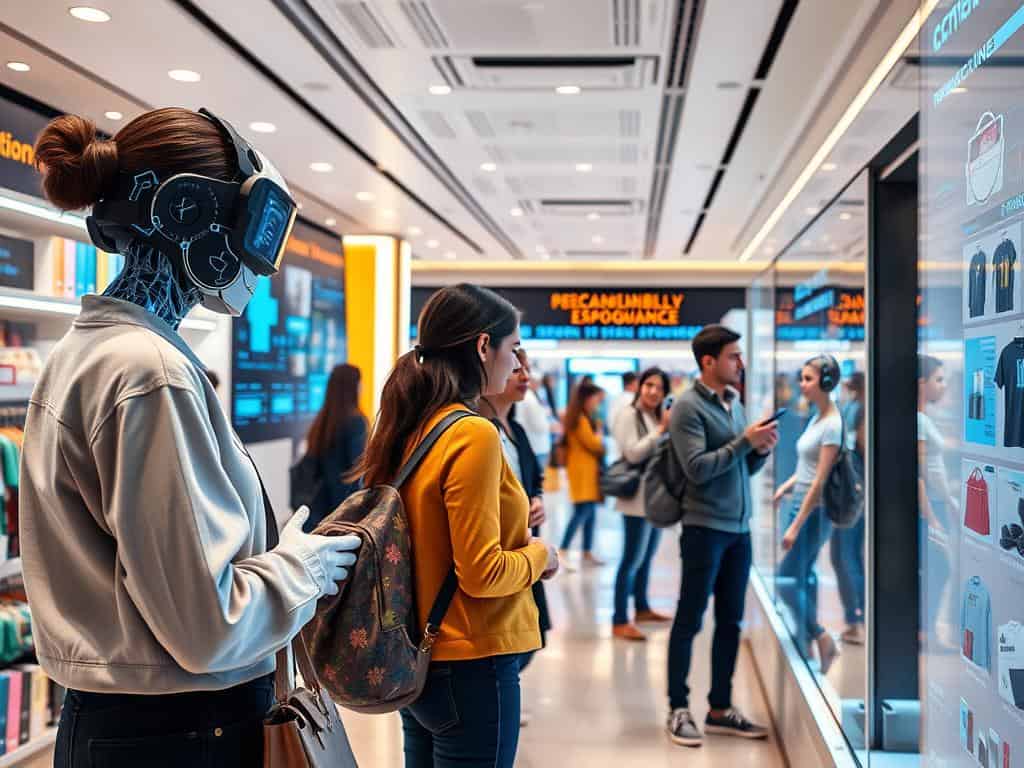
AI in Retail: Transforming Operations and Efficiency
AI is changing retail operations, making them more efficient. It helps companies automate tasks, reducing errors and improving daily work. By using AI, businesses can boost productivity and profits.
Streamlining Supply Chains
AI makes supply chain management better. It uses data to predict demand, helping retailers manage their stock. This way, businesses can avoid having too much or too little stock.
Innovative AI Applications in Retail
AI also helps with pricing. It looks at market trends and competitor prices to set the best prices for customers. This can increase revenue. AI also makes stocktaking more accurate and faster.
Exploring AI in retail shows its power to cut costs and improve efficiency. Retailers using AI are not just doing better; they’re growing and staying competitive.
Conclusion
Reflecting on AI in retail, it’s clear this is more than a trend. In 2024, AI is changing how we shop, making it more personal. Retailers use AI to understand customers better, making shopping more satisfying and loyal.
Now, I get help from chatbots and virtual assistants. They offer help and talk like humans. These AI systems get better with each use, making shopping fun and relevant. Despite challenges like privacy and setup, the benefits are too great to ignore.
Looking to the future, retailers who balance innovation and ethics will succeed. The US retail industry is huge, with over $5.4 trillion in sales. AI is key to making shopping better, more efficient, and personal.
