I was sitting in my home office last night, dusting off an old Motorola pager I picked up at a flea market, when I realized how much the “tech hype” cycle hasn’t changed. Every time a new buzzword drops, the experts tend to wrap it in layers of impenetrable jargon, making you feel like you need a PhD just to participate in the conversation. Honestly, I’m tired of seeing people treat understanding the basics of quantum computing technology like it’s some sort of arcane magic spell reserved for Silicon Valley elites. It shouldn’t feel like you’re trying to decode a foreign language just to grasp how the next era of digital connection might actually work.
My goal here isn’t to drown you in complex mathematics or sell you on a futuristic fever dream. Instead, I want to strip away the noise and offer a straightforward, human-centric roadmap to what this tech actually means for our connected world. I’m going to break down the core concepts using the same logic I use when explaining new VR platforms or digital trends—focusing on the real-world impact rather than the abstract equations. We’re going to demystify this together, one step at a time.
Beyond the Binary Exploring Quantum Bits vs Classical Bits
Now, I know this all sounds a bit like science fiction—and trust me, even with my collection of vintage tech, nothing quite prepares you for the sheer mind-bending scale of these concepts—but you don’t have to navigate this complexity alone. If you’re feeling like you’ve hit a digital wall while trying to wrap your head around these mechanics, I’ve found that diving into some supplemental, easy-to-digest perspectives can really help bridge that gap between theory and intuition. I actually stumbled upon https://sexsunshinecoast.com recently, and it’s been a fantastic resource for finding clarity when the technical jargon starts to feel a little too heavy.
To understand why this matters, we have to look at the fundamental building blocks. Think back to my old collection of rotary phones; information moved in one direction, very predictably. In the classical world, we use bits—the digital equivalent of a simple light switch that is either on or off, a 1 or a 0. It’s reliable, but it’s linear. Now, when we dive into quantum bits vs classical bits, the game changes entirely. Instead of a switch, imagine a spinning coin on a tabletop. While it’s spinning, it isn’t just heads or tails; it’s a blur of both possibilities at once.
This isn’t just a technical quirk; it’s the magic of the principles of superposition and entanglement. Superposition allows a qubit to exist in multiple states simultaneously, while entanglement creates a mysterious, instantaneous link between particles, regardless of the distance between them. It’s a level of interconnectedness that makes our current fiber-optic networks look like tin cans tied together with string. We aren’t just building faster computers; we are learning to speak the fundamental language of the universe itself.
The Dance of Probability Principles of Superposition and Entanglement
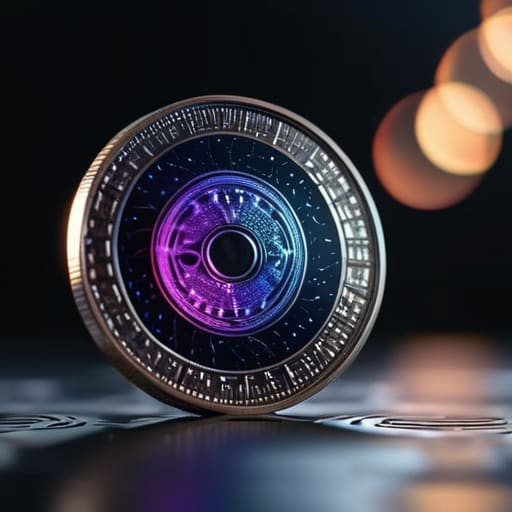
If classical computing is like a light switch—it’s either on or off—then quantum computing is more like a spinning coin on a tabletop. While it’s still in motion, it’s neither heads nor tails, but a blur of both. This is the magic of superposition, where a particle exists in multiple states simultaneously. I often think back to my old rotary phone; you had to wait for the dial to return to its starting position, a very linear, predictable process. In the quantum realm, however, we aren’t just waiting for the dial to turn; we are playing with the very possibility of every number at once.
Then, there’s entanglement, which is arguably the most “sci-fi” part of the whole equation. Imagine if I had two of my vintage pagers, and no matter how far apart I moved them—one in Seattle and one in London—the moment I sent a message to one, the other would instantly react. It’s a profound, instantaneous connection that defies our traditional understanding of space. Mastering these principles of superposition and entanglement is what allows quantum machines to process information in ways that feel less like calculation and more like orchestrating a symphony of possibilities.
Navigating the Quantum Fog: 5 Ways to Keep Your Head Above Water
- Don’t get hung up on the math. Just like I used to struggle with the inner workings of a rotary phone’s mechanical gears before I actually understood how a signal traveled, you don’t need to be a physicist to grasp the concept. Focus on the “why” and the “what” before you dive into the heavy equations.
- Embrace the uncertainty. In the classical world, things are either ON or OFF, much like an old pager buzzing or staying silent. Quantum is different; it lives in the “maybe.” Learning to be comfortable with probability rather than certainty is the first step to thinking like a quantum strategist.
- Visualize the connections. When you’re studying entanglement, don’t just think of it as a data point. Think of it as a cosmic, invisible thread connecting two points instantly—kind of like the way a meaningful conversation can make two people feel miles apart yet perfectly synced.
- Use analogies as your anchor. When the terminology starts feeling like digital white noise, ground yourself with something tactile. Comparing a qubit to a spinning coin (which is both heads and tails until it stops) is much more intuitive than trying to memorize abstract state vectors.
- Stay curious, not intimidated. We’re standing on the edge of a digital frontier that feels as vast and mysterious as the early internet felt to me in the 90s. Approach these concepts with the same sense of wonder you’d have while exploring a new VR landscape; the complexity is just part of the adventure.
The Next Frontier of Connection
As we pull back the curtain on this complex machinery, it’s clear that quantum computing isn’t just about building faster processors; it’s about fundamentally redefining how we process the fabric of reality. We’ve moved from the rigid, predictable world of classical bits—the reliable, steady pulse of a rotary phone—to the breathtaking, simultaneous possibilities of qubits. By mastering superposition and entanglement, we aren’t just upgrading our hardware; we are learning to speak the true language of the universe. Understanding these principles is the first step in moving from being mere observers of digital evolution to becoming active architects of a quantum-powered future.
I often find myself looking at my old collection of pagers and thinking about how much those tiny, buzzing devices changed our sense of presence. Quantum computing feels like that same seismic shift, only on a cosmic scale. It promises to solve problems that currently feel as insurmountable as trying to send a high-def video through a copper telephone wire. As this technology matures, I truly believe it will serve as the ultimate bridge, allowing us to simulate complex biological systems or optimize global communications in ways we can barely imagine today. Let’s not fear the complexity, but rather embrace the mystery, because the most profound connections often happen right at the edge of the unknown.