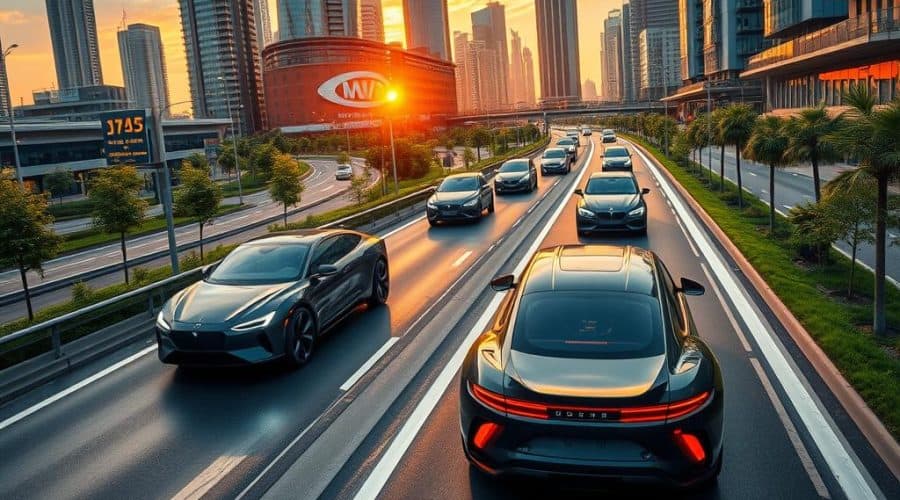
Did you know over 1.3 million people die every year due to road traffic accidents? Autonomous cars have the power to make roads safer and change how we travel. I look forward to the future, where self-driving vehicles will redefine our road experiences. These cars are designed to reduce human mistakes and make our journeys safer and more smooth. Imagine a world with no traffic jams, where you can relax or work while commuting. Autonomous cars are ready to transform cities, making them less crowded and improving our lives. Let’s dive into how these vehicles work, their impact on city life, and how they could make our daily routines better.
Key Takeaways
- Autonomous cars have the potential to significantly reduce traffic-related fatalities.
- Self-driving vehicles will transform urban infrastructure and commuting experiences.
- Advanced technology can lead to increased mobility for the elderly and disabled.
- Productivity during commutes may be improved as drivers become passengers.
- The widespread adoption of autonomous vehicles could reshape job markets related to transportation.
Understanding Autonomous Cars and Their Technology
In recent years, autonomous cars have started a revolution in how we think about travel. Known as self-driving vehicles, they need little or no help from humans. This makes us look at the act of driving differently. It’s key to understand what these cars are and the tech behind them to grasp their impact.
What Are Autonomous Cars?
Autonomous cars are a type of vehicle that can operate on their own. The Society of Automotive Engineers (SAE) describes six levels of automation. Level 5 cars don’t need a human to operate at all. Companies like Tesla, GM’s Cruise, and Waymo are leading in this area with their tech-savvy cars.
How Do Autonomous Cars Work?
Self-driving cars depend on complex systems to work. They use sensors, cameras, and radar to understand their surroundings. LiDAR technology is especially important for detecting obstacles and navigating roads. Processors and smart algorithms use this info to make decisions, like when to brake or steer, just like a human would.
Key Technologies Behind Self-Driving Vehicles
Autonomous vehicles rely on several important technologies. Communications between vehicles (V2V) and with the infrastructure (V2I) are vital. They help cars avoid dangers and find the best path. By 2030, many new cars will have these advanced autonomous features. This will make travel safer and more efficient for everyone.
The Impact of Autonomous Cars on Urban Congestion
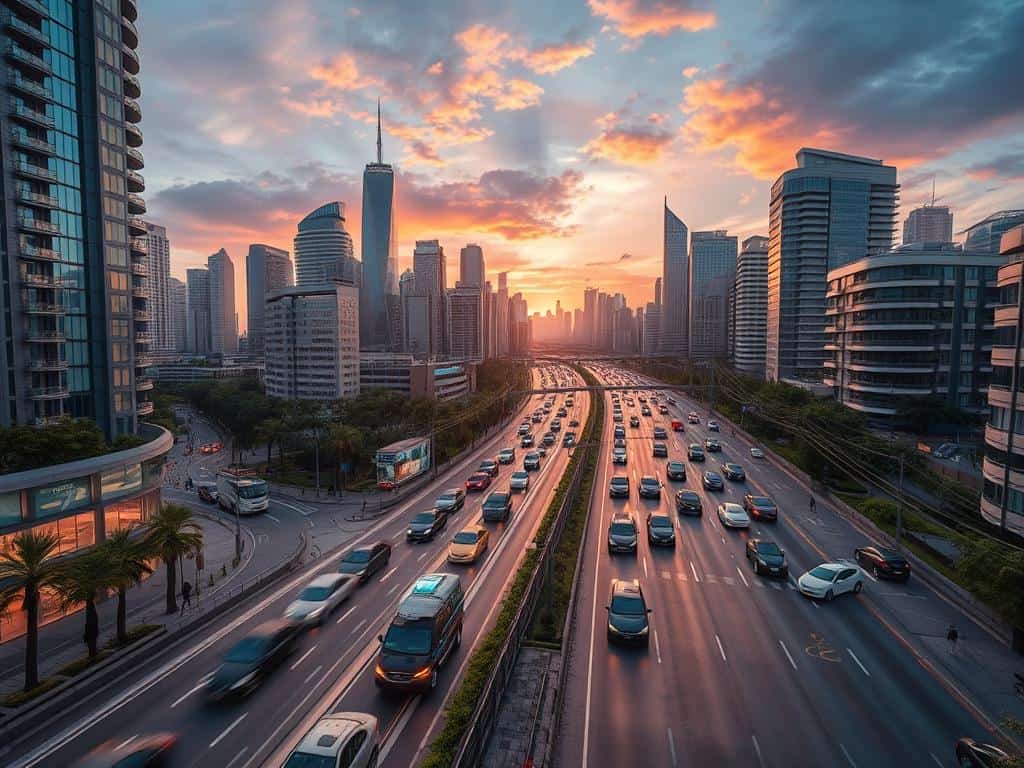
Autonomous cars are changing cities by fighting traffic jams. These cars use advanced tech to talk to each other and plan their paths. This makes city driving smoother and helps people get around faster.
Reduced Traffic Congestion
Autonomous cars are key in making city rides easier. They use smart algorithms to pick the best speeds and paths. So, they make traffic smoother and erase the usual start-stop driving headache.
By working together, these cars can reduce the time we spend in traffic. This makes going through the city much easier.
Reimagined Urban Spaces and Parking Solutions
Self-driving cars are changing how we think about city space and parking. Fewer people will own cars, so we won’t need huge parking areas. This means more room for parks, public spots, and places to meet.
I see cities filled with life and community spaces, not just car storage. It’s a future with vibrant, green, and welcoming urban areas.
Autonomous Cars and Enhanced Quality of Life
The arrival of autonomous vehicles is a big step forward, especially for people with mobility challenges. Self-driving technology can give the elderly and disabled more freedom. Now, they can overcome transportation hurdles that were hard with traditional driving.
Increased Mobility for the Elderly and Disabled
For people with mobility issues, autonomous cars open doors to new hobbies and socializing. Nearly half of these individuals see these cars as a key to community participation. Autonomous vehicles bring independence, making society more inclusive for all.
Productivity Gains During Commutes
Autonomous cars also make commutes more productive. You could work, read, or relax as your car drives you. This technology makes travel time valuable. It could boost the economy by up to $1.3 trillion in productivity savings.
Conclusion
The future of getting around is changing fast, and self-driving cars are leading the way. These smart vehicles could bring in $67 billion in economic gains and $3.1 trillion in benefits for society by 2021. By 2040, they might make up about 25% of all cars worldwide, offering great chances to make life better for many.
Dealing with heavy traffic is tough, but self-driving cars can help a lot. They could cut down city traffic by up to 30%. This is because they find parking quicker, making room for parks and green spaces. Also, since human mistakes cause nearly 94% of car accidents, self-driving cars could make roads much safer. This could save a lot of money, up to $625 billion a year, by preventing accidents and saving lives.
In closing, adopting self-driving cars could solve many problems with how we move around cities. Looking ahead, it’s important to talk about how to build the right infrastructure and laws, and how to get people on board. Doing this, I think, will help us build cleaner, safer cities. This will greatly improve how we all live together.
