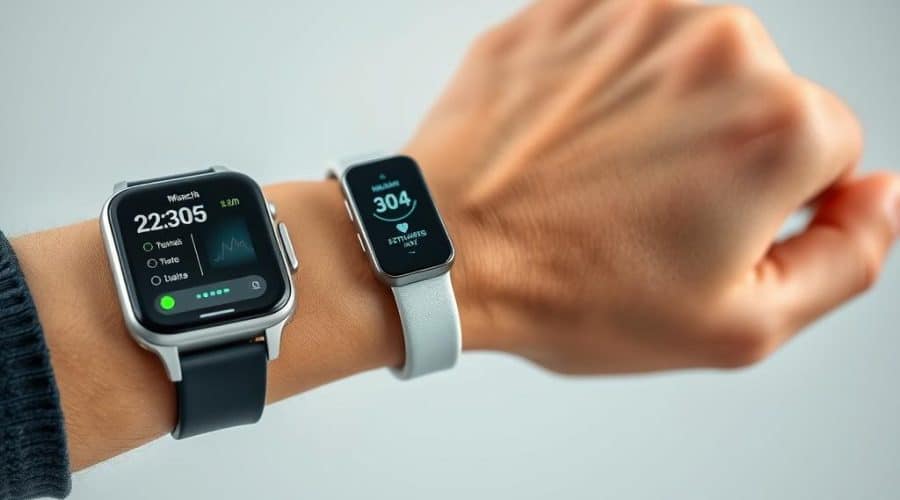
Did you know wearable devices can collect vital signs continuously? This gives us real-time health data. It also greatly improves how we support and manage health. In 2024, wearable health devices are more than trendy gadgets. They are key for personal health and delivering healthcare.
This year, technology brings us devices that do amazing things. For instance, smartwatches can now do electrocardiograms. And advanced fitness trackers let us watch our health metrics closely.
These devices can connect with electronic health records (EHRs). So, you can keep an eye on your health in different ways. This boosts personal accountability and empowerment. Now, Let’s look at the top wearable health devices this year. We’ll see their features, benefits, and how they’re changing healthcare.
Key Takeaways
- Wearable health devices provide real-time data for proactive health management.
- Smartwatches and fitness trackers are essential tools for monitoring health metrics.
- Integration with EHRs enhances personal accountability.
- AI-driven analytics improve patient care and outcomes.
- Compliance with quality standards is crucial for wearable device manufacturers.
- Continuous innovation drives the growth of the wearable health device market.
- Enhanced user experience and design are vital for product success.
The Rise of Wearable Health Devices in 2024
Wearable health tech is growing fast in 2024, thanks to the need for better health tracking. People want devices that help with health care and personal wellness tracking. Products like the Gabi SmartCare and Oura Ring show how this trend is changing the way we monitor our health.
Current Trends in Wearable Technology
The global market for wearable healthcare devices might hit $70 billion by 2028. This growth has an annual rate of over 11 percent. Devices like heart monitors and glucose sensors are key for making medical choices and need FDA approval. Meanwhile, fitness trackers and smartwatches are making a lot of money in consumer markets. However, a 2022 review raised concerns about the data accuracy of these gadgets.
Impact on Healthcare and Personal Wellness
Wearable tech is transforming health care and wellness by improving remote health services. By monitoring health constantly, these devices make care more personalized. This helps get better outcomes for patients and can reduce hospital visits for chronic illnesses. Wearables also let people take charge of their health better. They help doctors by providing immediate health data, helping with faster and preventive health care.
Top Wearable Health Devices You Should Consider
Wearable health devices are growing fast thanks to emerging technologies. Smartwatches and fitness trackers are changing how we take care of ourselves. Now, it’s easier to keep an eye on our health and make better daily choices.
Smartwatches for Health Monitoring
Smartwatches like the Apple Watch and Garmin Lily 2 are at the forefront of health monitoring. They come with ECG functionality and can detect heart rhythms. This makes it easy for users to look after their health.
These devices work well with health apps. They track heart rate, sleep, and how much you move. This turns smartwatches into key tools for a healthier life.
Fitness Trackers for Everyday Use
Fitness trackers are getting more popular. People who want to track their daily activities and reach health goals love them. The Oura Ring, for example, accurately measures your heart rate and sleep.
These devices give helpful feedback and tips. This helps users keep up with their fitness plans. They’ve become crucial for those looking to live a healthier life every day.
Emerging Technologies in Wearables
New tech like wearable biosensors and microfluidic patches is changing the game. These allow for continuous health monitoring. Users can now understand their health in new ways.
For instance, Dexcom’s Continuous Glucose Monitor gives instant glucose levels. Also, partnerships like PatientPoint’s are innovating in remote health monitoring. With these advancements, the future of health devices looks promising.

Conclusion
Wearable health devices are changing how we manage our health. They use new tech and make people more aware of their health. This is pushing the industry to grow fast in 2024. These devices help in many ways, like helping stroke survivors recover and letting people manage chronic diseases better with wearable cameras.
The future of wearable tech is exciting, with AI and new flexible tools making healthcare better. These improvements mean wearable tech can help keep people healthy in many ways. For example, they can check how older adults walk or help in recovering from bone injuries.
I use wearable health devices in my life to track my health. This helps me set health goals and stay connected with my doctors. It makes managing my health easier. As health tech keeps improving, I look forward to even more tools that will help us take care of our health better.
